Safety, Regulatory, Traffic & Parking Signs
Safety and Regulatory signs are signs that, just as the name suggests, are required by regulation—this could be at the local, state, or federal level, or all three—or are intended to help keep people safe. Often, these signs serve both purposes, as governments don’t typically write regulations with the intent of making people less safe. But while safety signs might be mandated by law, they aren’t always.
Regulatory Signs
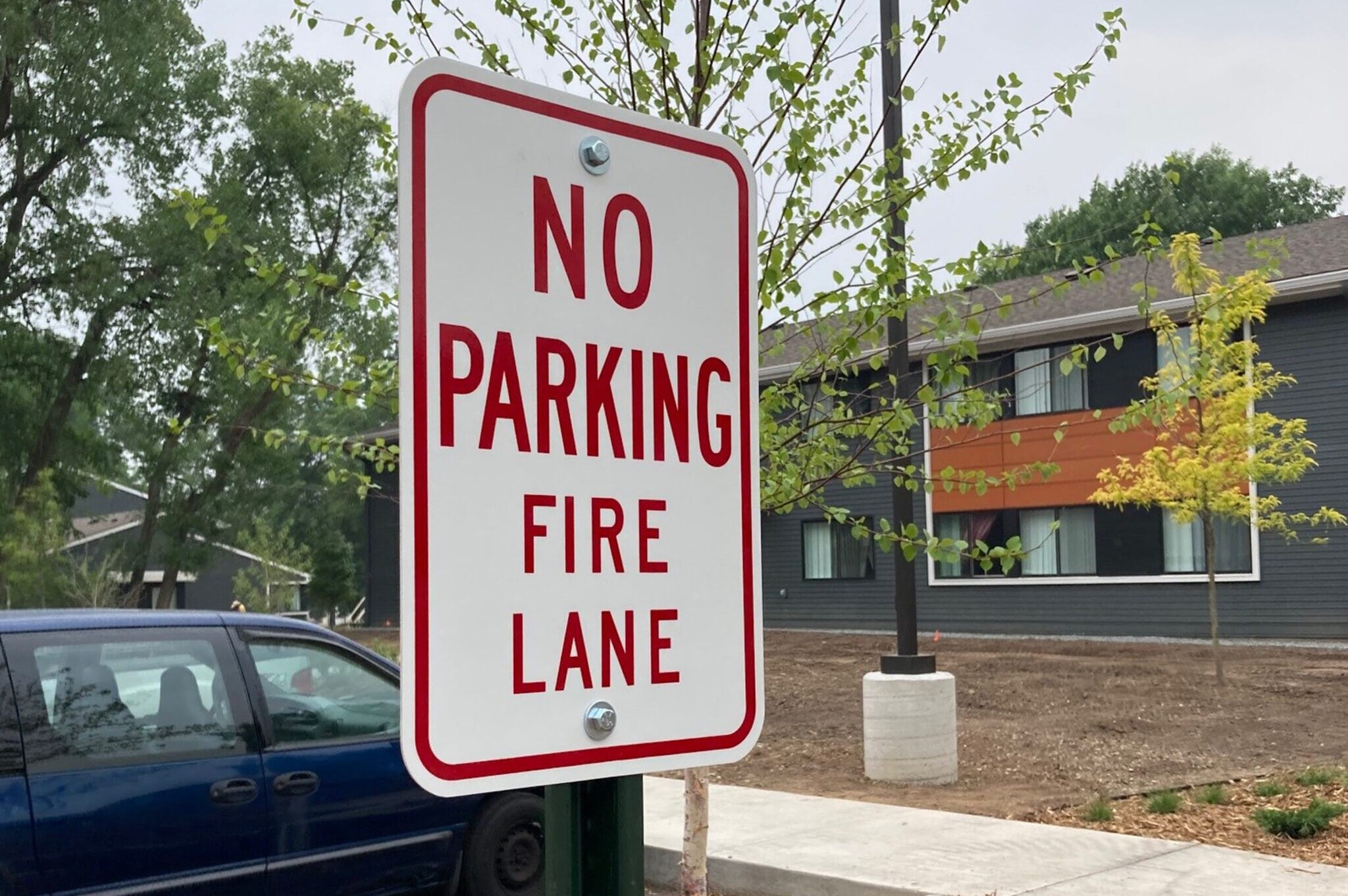 You encounter regulatory signs every single day, so frequently that they don’t register as “regulatory signs.” The most common regulatory signs are traffic signs. Stop, yield, no turn on red, speed limit signs—these are all regulatory signs intended to govern traffic flow and keep people safe. Regulatory signs also include parking signs—or more specifically, no parking signs. These are intended to keep space open for emergency vehicles to access various areas, or to ensure that a handicapped parking space has enough room around it for people to exit and enter the vehicle.
Beyond traffic and parking regulation, other types of regulatory signs are those mandated by law, such as ADA compliant room identification signs; or OSHA (such as “Employees must wash hands before returning to work” signs in the bathroom); or warning and other safety signs in and around a workplace or jobsite.
Regulatory Sign Materials
Modern regulatory traffic signs are almost always made from the same materials because that too is subject to regulation from the Department of Transportation. These types of signs all must be retroreflective or illuminated. It’s not always a simple matter to install illumination for every traffic sign, so these signs are usually printed on a specific type of reflective sheeting that meets specific standards and applied to an aluminum sign. This way, the signs are highly visible both day and night, and extremely durable.
For other regulatory signs, the material options are wider, but often still subject to certain codes. These types of signs offer more flexibility in terms of design than traffic signs. They usually have to include certain images, text, or colors, but can still be made to feel part of your brand.
Safety Signs
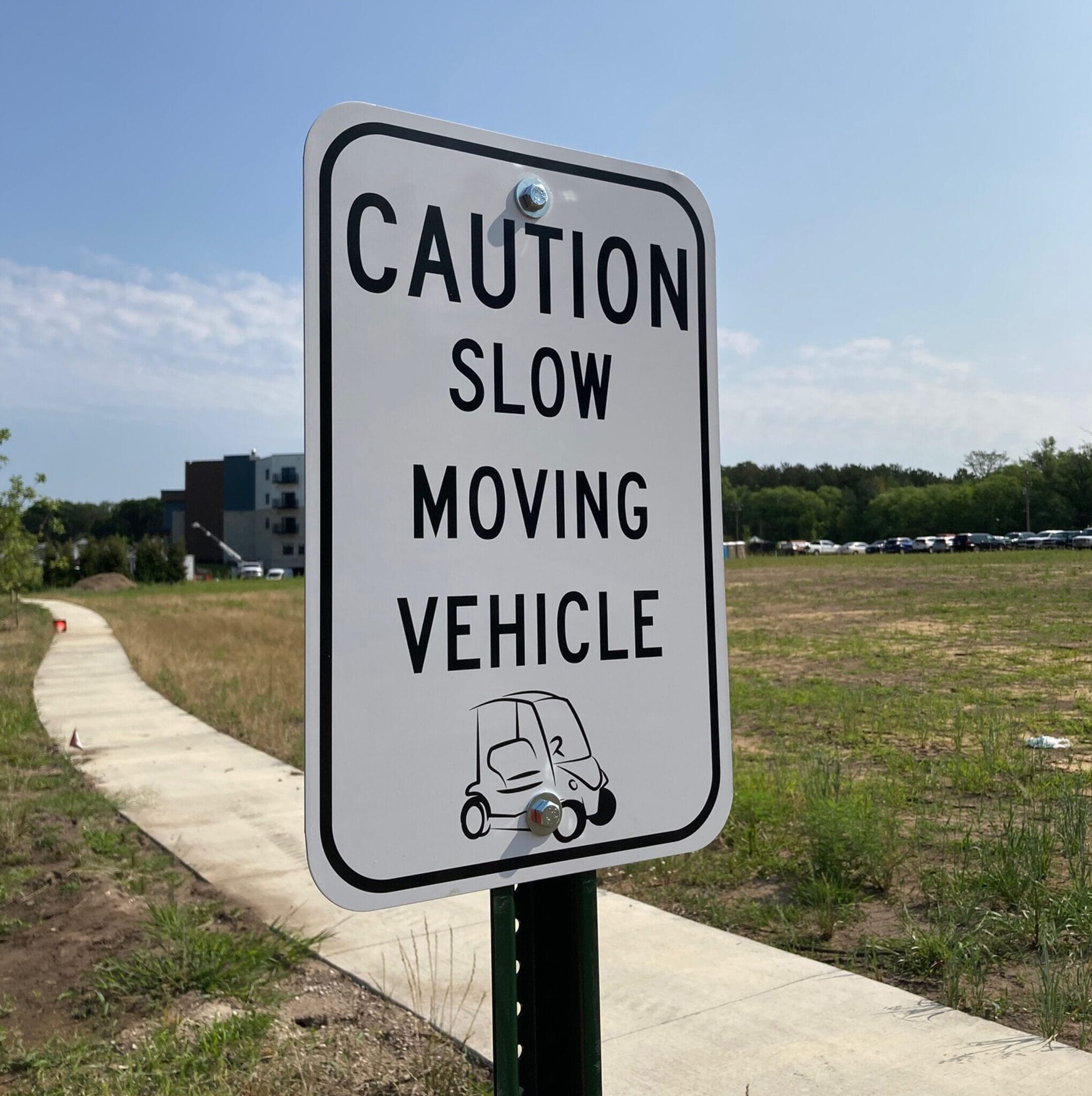 Safety signs are all around us, and sometimes underneath us (there were lots of traffic direction and six-foot distance signs on business’ floors following the COVID-19 outbreak). These can come in almost any form. Some of them always look the same and are required to by law. The signs on the back of a tanker truck that indicate what chemicals the tank contains, for instance. Some safety signs are so ubiquitous they almost always look the same, and need no words at all, like a no smoking graphic.
The purpose of safety signs is, of course, to keep people safe in places that could pose a hazard to them. This most aggressive KEEP OUT sign you can imagine isn’t just being rude, it’s trying to keep people from injuring themselves.
Traffic and Parking Signs
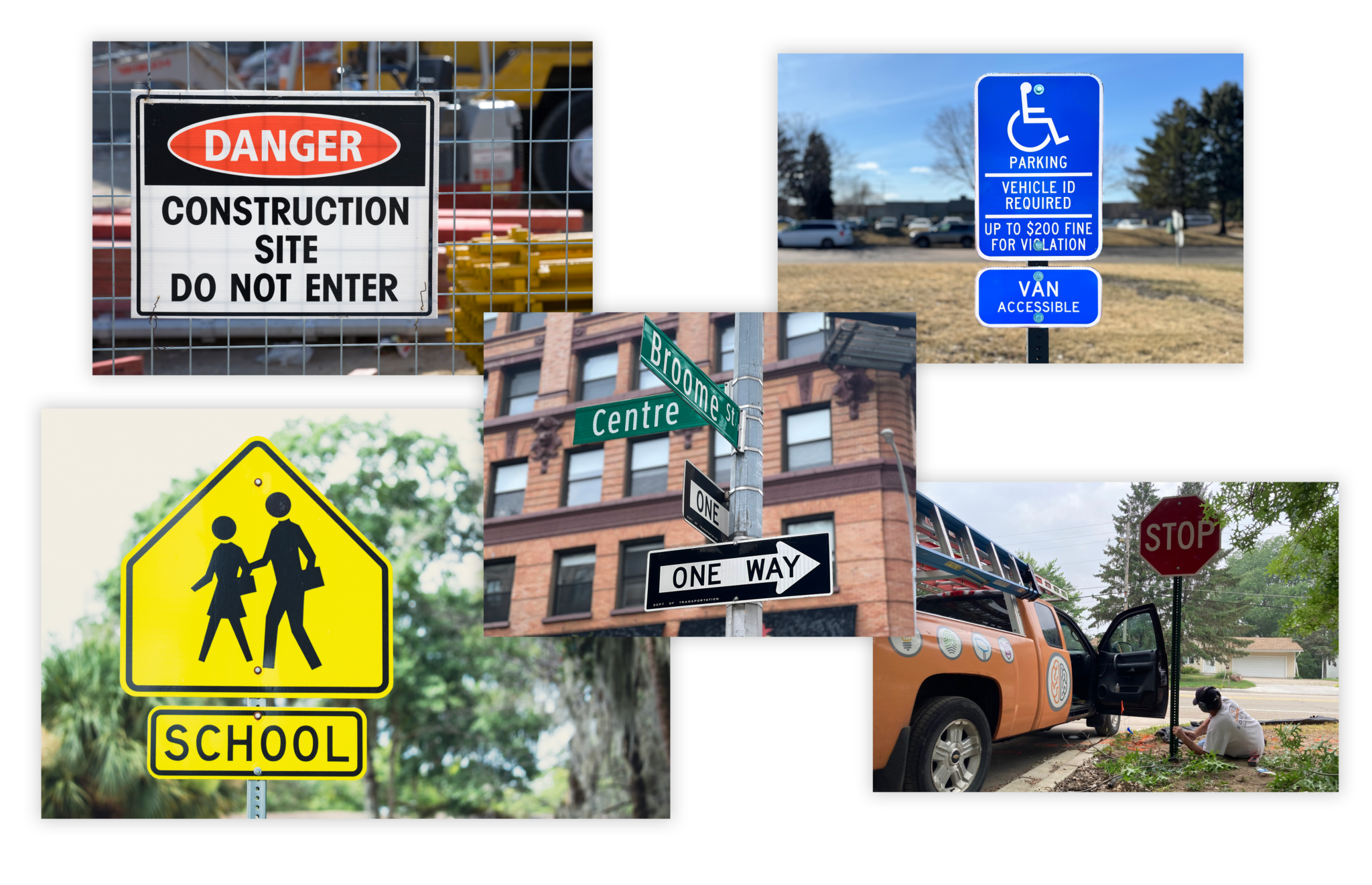 Traffic and parking signs are some of the most common sign types you see every day. They are so ubiquitous that you often take them in and forget them all in a few seconds. Even though they can so quickly pass through your mind, they are very important to keep our roads and parking lots safe and functioning smoothly.
Parking Signs tell you where and when you can park in a lot. They tell you if a space is reserved or if it requires a permit. They give timeframes of when you are allowed to park in that spot. They are important to keep space open for emergency vehicles to reach emergencies, and for people with mobility difficulties to park close to entrances.
Construction Signs warn us that a road or parking lot is under construction. For example: road closed signs tell us a section is closed to traffic. Detour signs show drivers another way.
Street Signs tell us the names of the streets, park paths, and trails we are on.
School Sign warn us that a school is near, and children are present in the area. Some of these signs mark bus loading zones. Others notify drivers of a lower speed limit when children are present. These signs let you know you need to be cautious.
